
The Ultimate Collection of Foundation Repair Products for Home Improvement
Access essential tools and materials that help you achieve a secure and stable foundation for your property.
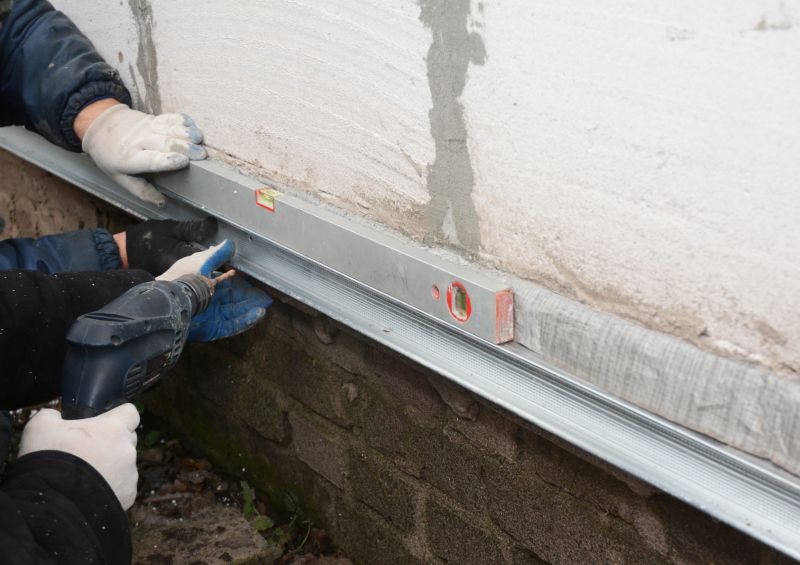 Foundation repairs are a critical aspect of maintaining the structural integrity of a building, especially in regions like Chippewa Falls, WI, where soil conditions and weather patterns can influence foundation stability. Various products and repair methods are available to address issues such as settling, cracking, or shifting foundations. Selecting the appropriate solutions requires understanding the different types of products designed for foundation stabilization and repair.
Top Overall Option
Heavy-Duty Foundation Support System
A comprehensive foundation support system that includes adjustable piers, underpinning components, and stabilization brackets. Designed for versatility, these systems can accommodate various foundation types and damage levels, providing reliable support and helping to restore structural integrity over time.
Types of Products For Foundation Repairs
Helical Piers
Helical piers are screw-like supports that can be installed deep into stable soil to lift and stabilize foundations.
Push Piers
Push piers are driven into the ground beneath the foundation to provide support and prevent further settling.
Slab Jacks
Hydraulic or mechanical jacks used to lift and level concrete slabs that have settled or shifted.
Underpinning Systems
Supporting structures that extend the foundation depth to reach more stable soil layers.
Epoxy Injection Kits
Products used to fill and seal cracks in concrete foundations to prevent water intrusion and further damage.
Carbon Fiber Reinforcement
Flexible strips applied to crack surfaces to reinforce and prevent further cracking.
Waterproofing Membranes
Protective barriers applied to foundation walls to prevent moisture infiltration.
Soil Stabilizers
Chemical or mechanical solutions designed to improve soil stability around the foundation.
Foundation Anchors
Anchoring systems that secure the foundation to surrounding soil or structures to prevent movement.
Grout and Sealants
Materials used to fill voids and seal cracks, providing additional support and moisture resistance.
Mudjacking Equipment
Pumping systems used to lift sunken concrete slabs by injecting a slurry mixture beneath them.
Steel Push Piles
Steel supports driven deep into the ground to provide stable support for foundations.
Foundation Ventilators
Devices that promote air circulation to reduce moisture buildup around the foundation.
Drainage Systems
Products that direct water away from the foundation to reduce soil erosion and hydrostatic pressure.
Soil Grouting Materials
Injectable materials that stabilize loose or expansive soils around the foundation.
Popular Choices
Hydraulic-driven supports that offer adjustable foundation stabilization for various structures.
Easy-to-use kits for sealing cracks and preventing water intrusion in concrete foundations.
Devices that allow for precise leveling and lifting of settled slabs or beams.
Corrosion-resistant supports suitable for deep foundation stabilization.
Protective barriers that help keep moisture out of basement and foundation walls.
Injectable solutions that improve soil bearing capacity around foundations.
Lightweight foam injected beneath slabs to lift and level uneven surfaces.
Anchors used to secure structures to stable foundation points.
High-viscosity epoxy formulations designed for filling and sealing foundation cracks.
Chemical solutions added to soil to enhance stability and reduce shifting.
Systems installed to direct water away from the foundation area.
Support braces that help reinforce weak or cracked foundation walls.
Materials installed to prevent moisture vapor from penetrating basement floors.
Hydraulic tools used to lift and level sunken foundation sections.
Products that regulate soil moisture levels to prevent expansion or contraction.
Flexible fillers designed to repair minor cracks in concrete slabs.
Many repair products are engineered to provide support and reinforcement to compromised foundations. These include underpinning systems, helical piers, and slab jacks, which help distribute weight more evenly and restore stability. Additionally, waterproofing and sealing products are often employed alongside structural supports to prevent further deterioration caused by moisture infiltration.
When considering foundation repair products, it is essential to evaluate their compatibility with the specific issues faced by the property. Factors such as soil type, foundation material, extent of damage, and accessibility will influence the choice of products. Professional assessment and consultation are recommended to determine the most suitable options for long-term stability.
Proper installation and quality materials are crucial for effective foundation repairs. Using products that are designed for durability and ease of application can lead to better outcomes and potentially reduce future repair needs. Whether opting for hydraulic jacks to lift settled slabs or epoxy injections to fill cracks, understanding the purpose and application of each product type helps ensure a successful repair process.
Key Buying Considerations
- Assess the specific foundation issues such as cracking, settling, or shifting to choose appropriate products.
- Evaluate the soil conditions around the property, as different soils respond better to certain stabilization methods.
- Consider the type of foundation material (concrete, pier, slab, etc.) when selecting repair products.
- Determine the extent of damage to understand whether a DIY solution is feasible or professional intervention is needed.
- Review product compatibility with existing structures and materials to ensure effective integration.
- Prioritize products with proven durability and suitability for long-term performance in your local climate.
- Check for ease of installation, especially if considering DIY options, to avoid potential installation errors.
- Consider the potential need for waterproofing or moisture control products alongside structural supports.
- Research the supplier’s reputation and product reviews for insights into reliability and effectiveness.
- Review warranty and support options available with the products to ensure assistance if needed.
- Factor in the accessibility of the repair site—some products require more space or specific conditions for installation.
- Estimate the overall project budget, including materials and labor, to align with your financial plans.
- Consult with a foundation repair specialist to validate product choices and ensure appropriate application.
- Consider future maintenance needs and whether the products require periodic inspections or reapplications.
- Verify that the selected products meet local building codes and regulations for foundation work.